The people behind our products: Working with suppliers to improve social standards
15 July 2026
Every Westwing Collection product carries a story that begins long before it reaches a customer’s home. Behind every sofa, table, textile or decorative piece are the people who manufacture it. Ensuring that these products are made under safe and fair working conditions is a fundamental part of how we work with our suppliers.
Today, 52% of all Westwing Collection products are manufactured in Europe, with the remainder produced in China, India and other regions. Because working conditions, regulatory frameworks and local challenges vary considerably from region to region, a risk-based and proportionate approach has been adopted.
We categorise our Westwing Collection suppliers as strategic, key or complementary, allowing us to focus our efforts where we have the greatest influence and the strongest opportunity to support long-term improvements. Strategic and key suppliers undergo full social audits, while complementary suppliers complete proportionate self-assessments aligned with their size and risk profile. For suppliers outside the EU, we require recognised third-party social audits or certifications, such as amfori BSCI, SMETA or SA8000. Our expectations are set out in the Business Partner Code of Conduct and the Private Label Supplier Code of Conduct, which form part of every supplier agreement.
Independent assessments beyond simple compliance
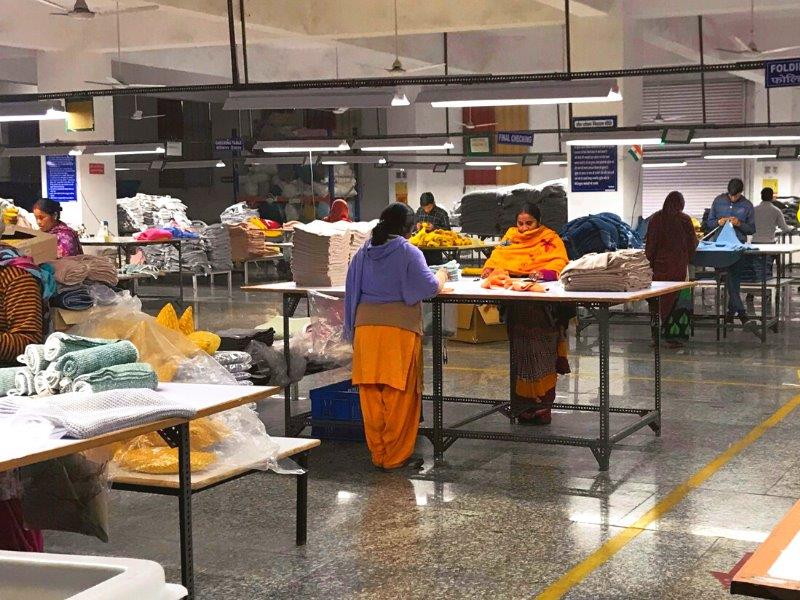
Understanding working conditions requires more than reviewing documents. Independent auditors, alongside members of Westwing’s Sustainability and Buying teams, visit production sites to assess topics such as working hours, wages, health and safety, non-discrimination, freedom of association and business ethics against international standards and local legislation.
In 2025, 99.9% of Westwing Collection suppliers were covered by social audits, reflecting almost complete assessment coverage across our private label supplier base. Most audits were conducted through amfori BSCI and SMETA, complemented by our own internal supplier assessments. Additionally, 99.7% of private label suppliers were also evaluated against environmental criteria.
When serious human rights or environmental concerns are identified, our Zero-Tolerance Handling Protocol establishes clear steps and responsibilities through defined escalation, investigation and remediation procedures to ensure issues are addressed consistently and without delay.
Supporting suppliers to build lasting capabilities
While audits help identify risks and undertake corrective actions, we believe lasting progress comes from partnership rather than oversight. We, therefore, work with suppliers to strengthen their own management systems and integrate responsible business practices into their daily operations.
Through the amfori Academy, our suppliers have access to webinars, e-learning modules and classroom training covering labour rights, health and safety, environmental management and responsible business conduct. Programmes such as amfori’s Speak for Change also give workers in regions like Vietnam and India a safe and trusted way to raise concerns and contribute to workplace improvements.
This collaborative approach has helped several suppliers establish more structured social and environmental management systems, strengthen health and safety practices, and improve the follow-up of corrective actions identified during audits.
Supporting suppliers in developing these capabilities remains a key focus, particularly among our strategic and key partners.
Continuous improvement through partnership
The value of this approach is reflected in long-term supplier relationships. One long-standing supplier, the manufacturer of our best-selling Lennon sofa, worked alongside our teams to build a comprehensive Social Management System, with clear policies, risk assessments and corrective-action processes, and is now strengthening its alignment with international audit standards. Today, 31% of the Westwing Collection suppliers have established social management systems and 30% environmental management systems.
Looking ahead, we will continue strengthening collaboration with suppliers, particularly in Europe, expand training opportunities together with amfori, further develop grievance mechanisms and explore additional collaborative initiatives to promote continuous improvement across our supply chain.
At Westwing, responsible sourcing is not measured solely by audit results. By combining independent verification with long-term collaboration, we work with our suppliers to strengthen working conditions and build more resilient supply chains over time.